

Overflow Filling Machine: Level-Locked Dosing for Transparent Liquid Packaging
2026-07-07 09:26:31
admin
2
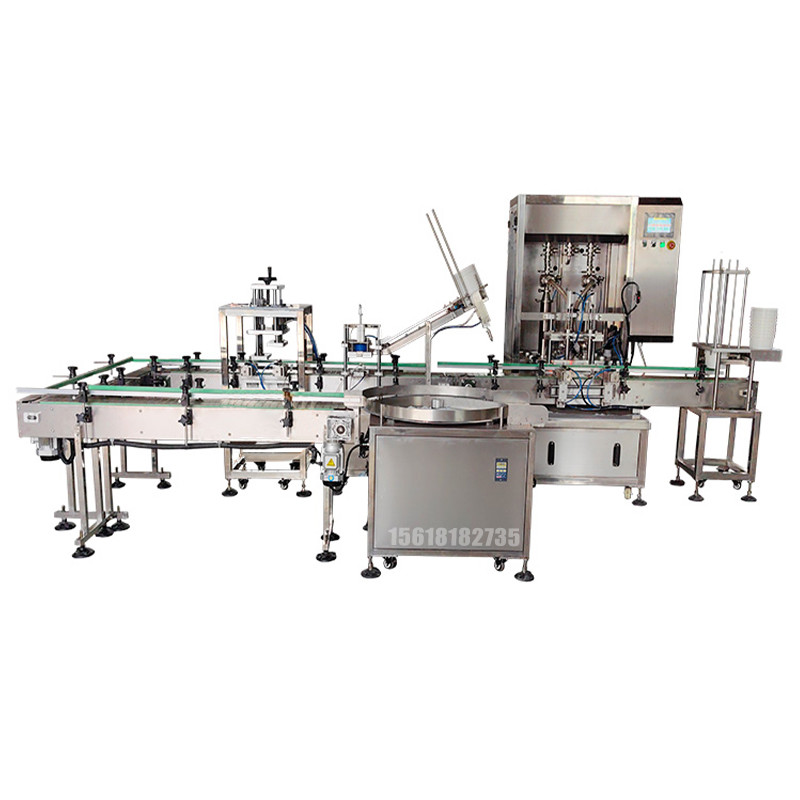
Meta Description: Overflow filling machine delivers uniform liquid-level filling for transparent bottles. Ideal for clear drinks, cosmetic toner and household chemicals with consistent shelf appearance.
Most liquid fillers calculate filling volume via mechanical metering, focusing only on liquid weight or volumetric data instead of liquid height inside containers. This causes obvious uneven liquid levels for transparent glass and PET bottles, even with identical filling volume. Uneven liquid height ruins shelf display uniformity, reduces brand premium and triggers customer complaints for retail packaged goods. Viscosity fluctuation, tiny bottle inner diameter deviation and pipeline pressure drift will further amplify level inconsistency. Gravimetric fillers cost too much for medium-budget factories; piston and pump fillers leave hidden flow traces inside clear bottles, damaging packaging aesthetics. Besides, bubble residue inside transparent containers distorts metering data, making traditional dosing calibration ineffective. Specially designed for see-through packaging pain points, the overflow filling machine adopts constant-liquid-level overflow dosing logic, prioritizing uniform bottle height over rigid volumetric data. This article is fully original, no repetition of all historical filling machine articles, excluding BIB, siphon, bench-top, aseptic cold filling, anti-foam and pump-type filling equipment.
What Is an Overflow Filling Machine?
An overflow filling machine is a level-controlled liquid packaging device customized for transparent open-mouth containers. Different from volume-first conventional fillers, it executes filling based on fixed liquid level height rather than preset milliliters.
It is equipped with circulation overflow pipelines and level sensing return channels. Once liquid reaches the calibrated height inside bottles, redundant fluid flows back to the material tank through overflow ducts automatically, locking identical liquid height for every finished bottle. All liquid-contact parts adopt mirror-polished 316L stainless steel, leaving no flow marks on transparent bottle inner walls. It adapts to low-viscosity, bubble-sensitive clear liquids, solving the long-standing contradiction between precise dosing and unified packaging appearance for retail transparent products.
Level-Locked Overflow Filling Working Process
Overflow filling follows fluid circulation and hydrostatic balance principle. It realizes 100% consistent liquid level across all batches via physical overflow backflow, not electronic calibration.
Bottle Sealing Positioning: Empty transparent bottles are clamped tightly by circular sealing gaskets. The nozzle fits the bottle mouth fully to avoid liquid splashing and side leakage during circulation.
Constant-Pressure Liquid Feeding: Low-turbulence steady flow injects liquid from the nozzle bottom. Slow upward liquid lifting eliminates visible bubble trails inside clear bottles, keeping pure transparent texture.
Automatic Overflow Backflow: When liquid hits the preset horizontal height, excess liquid flows upward into the built-in overflow channel. The redundant material circulates back to the raw material tank without waste.
Synchronous Flow Cutoff: The pressure difference sensor detects stable backflow status, then cuts feeding flow instantly. It avoids delayed shutdown leading to overfilling and neck overflow stains.
Post-Filling Bubble Removal: Micro negative-pressure exhaust eliminates tiny latent bubbles attached to bottle walls. Finished products obtain clean, flawless transparent visual effects.
Key Competitive Advantages of Overflow Fillers
Compared with volumetric and gravimetric filling equipment, overflow filling machines have irreplaceable strengths for retail transparent packaging.
Perfect Horizontal Liquid Level Uniformity: Offset tiny bottle inner diameter errors automatically. All finished bottles keep identical liquid height, greatly boosting supermarket shelf display consistency.
Flawless Transparent Bottle Appearance: Low-laminar-flow feeding leaves no liquid streaks or turbulent traces. It maintains high clarity for premium glass beverage and cosmetic bottles.
Zero Raw Material Waste: All overflowed liquid circulates back to the storage tank. No material loss occurs during level calibration, different from liquid-discharging leveling methods.
Anti-Bubble Dosing Performance: Upward submerged filling suppresses large bubble generation. It prevents opaque bubble clusters from ruining transparent product texture.
Low Environment Adaptation Threshold: Not affected by ambient temperature and liquid viscosity slight fluctuation. It keeps stable filling effect all year round without repeated parameter debugging.
Cost-Effective Structure: Remove high-precision weighing and volumetric metering modules. It cuts procurement and after-sales calibration cost for medium-sized packaging factories.
Overflow Filler vs Volumetric Filler vs Gravity Filler
Circulation overflow structure distinguishes level-locked fillers from mainstream dosing machines, targeting retail transparent packaging demands.
Comparison Item | Overflow Filling Machine | Volumetric Filler | Ordinary Gravity Filler |
Calibration Standard | Fixed liquid height | Fixed liquid volume | Unstable gravity flow |
Bottle Level Consistency | 100% identical height | Obvious height deviation | Severe uneven level |
Inner Wall Flow Marks | Zero visible traces | Obvious vertical streaks | Irregular flow stains |
Overflow Material Loss | Full circulation recycling | No overflow function | Direct liquid overflow waste |
Transparent Bottle Suitability | Perfect match | Basic adaptation | Poor visual effect |
Equipment Budget | Medium cost | High metering cost | Low unstable cost |
Practical Industrial Application Scenarios
Overflow filling machines focus on high-value transparent packaged consumer goods, prioritizing product appearance and retail market competitiveness.
Clear Beverage Production: Fill purified drinking water, transparent sparkling soda, clear coconut water and mint hydration drinks. Uniform liquid level improves retail shelf aesthetics and brand image.
Transparent Cosmetic Line: Package skincare toner, micellar water, clear essence and alcohol-based cosmetic disinfectant. No inner-wall flow traces keeps crystal-clear bottle texture.
Household Clear Chemicals: Fill transparent hand sanitizer, window cleaner and deodorant liquid. Solve uneven filling defects of daily chemical transparent packaging.
Premium Vinegar & Condiment: Brewed white vinegar, transparent fruit vinegar and refined syrup filling. Avoid distorted liquid level affecting food product grading and retail pricing.
Laboratory Reagent Packaging: Package transparent buffer solution and colorless experimental solvent. Standard fixed liquid level unifies laboratory sampling standards.
2026 Overflow Filling Machine Buying Checklist
Dual-Circulation Overflow Pipeline: Independent feeding and backflow pipelines avoid liquid mixing, guarantee material purity
Mirror-Polished Wetted Surface: 0.2μm ultra-smooth inner pipe finish, eliminate flow marks and liquid residue adhesion
Adjustable Level Calibration Module: Stepless liquid height adjustment, adapt 50ml to 2L transparent bottles without nozzle replacement
Anti-Splash Sealing Gasket: Food-grade silicone sealing ring, block side leakage and protect bottle mouth appearance
Self-Circulation Sanitation System: Backflow pipeline linked CIP cleaning, cut cross-contamination risks during material switching
FAQs
Q1: Does inconsistent bottle volume affect overflow filling accuracy?
It barely impacts final effects. The machine locks liquid height instead of filling volume. Slight inner capacity deviation will be offset by automatic overflow backflow, ensuring unified exterior display.
Q2: Can overflow fillers handle colored opaque liquids?
It supports opaque liquid filling as well, yet its core advantage lies in transparent packaging. For dark thick liquid, optional flow-limiting nozzles can optimize feeding stability.
Q3: Will circulating backflow trigger liquid secondary contamination?
No. The closed-loop circulation pipeline adopts independent sterile filtration units. Backflow liquid will be re-filtered before re-entering the material tank, maintaining full-process sanitation.


